.svg)
.svg)

- Home
- About Us
- Academics


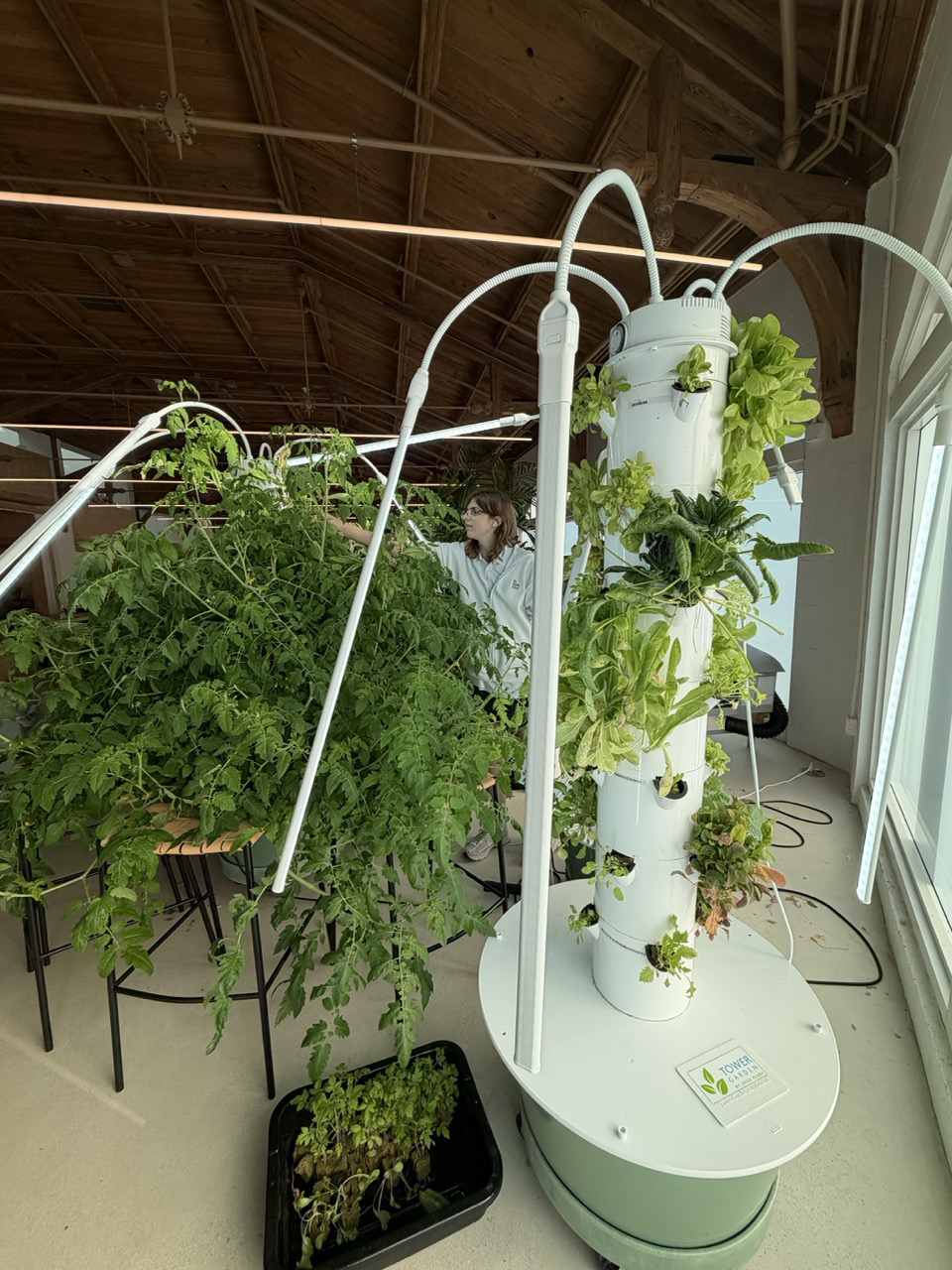

We are thrilled to shine a spotlight on a truly innovative and environmentally-conscious project that is currently blooming right here on the Greene School campus: a thriving hydroponic garden that’s bringing fresh, nutrient-dense produce straight to our faculty and campus kitchens!
This entire project is not a typical class assignment, but rather the product of deep passion and dedication, spearheaded by high school student Nate E. as an ambitious independent study project. With oversight and guidance from middle school science teacher Sarah Oster, Nate has successfully researched, built, maintained, and harvested a sophisticated, soil-free growing system that serves as a living laboratory for sustainable agriculture.
For those unfamiliar with this cutting-edge method, hydroponics is essentially a farming technique where plants are grown without the use of soil. Instead of extracting nutrients from dirt, the plant roots are either suspended in or constantly exposed to a meticulously balanced, oxygenated water solution that contains all the essential minerals needed for optimal growth.
The absence of soil is what makes this system so revolutionary, offering several distinct advantages over conventional farming:
This project perfectly embodies The Greene School’s core commitment to scientific innovation, hands-on learning, and environmental stewardship in the pursuit of food security.
Nate launched this independent project not just as a science experiment, but with a specific, practical goal: to explore sustainable agriculture methods and provide a consistent source of ultra-local, incredibly fresh greens to the school community.
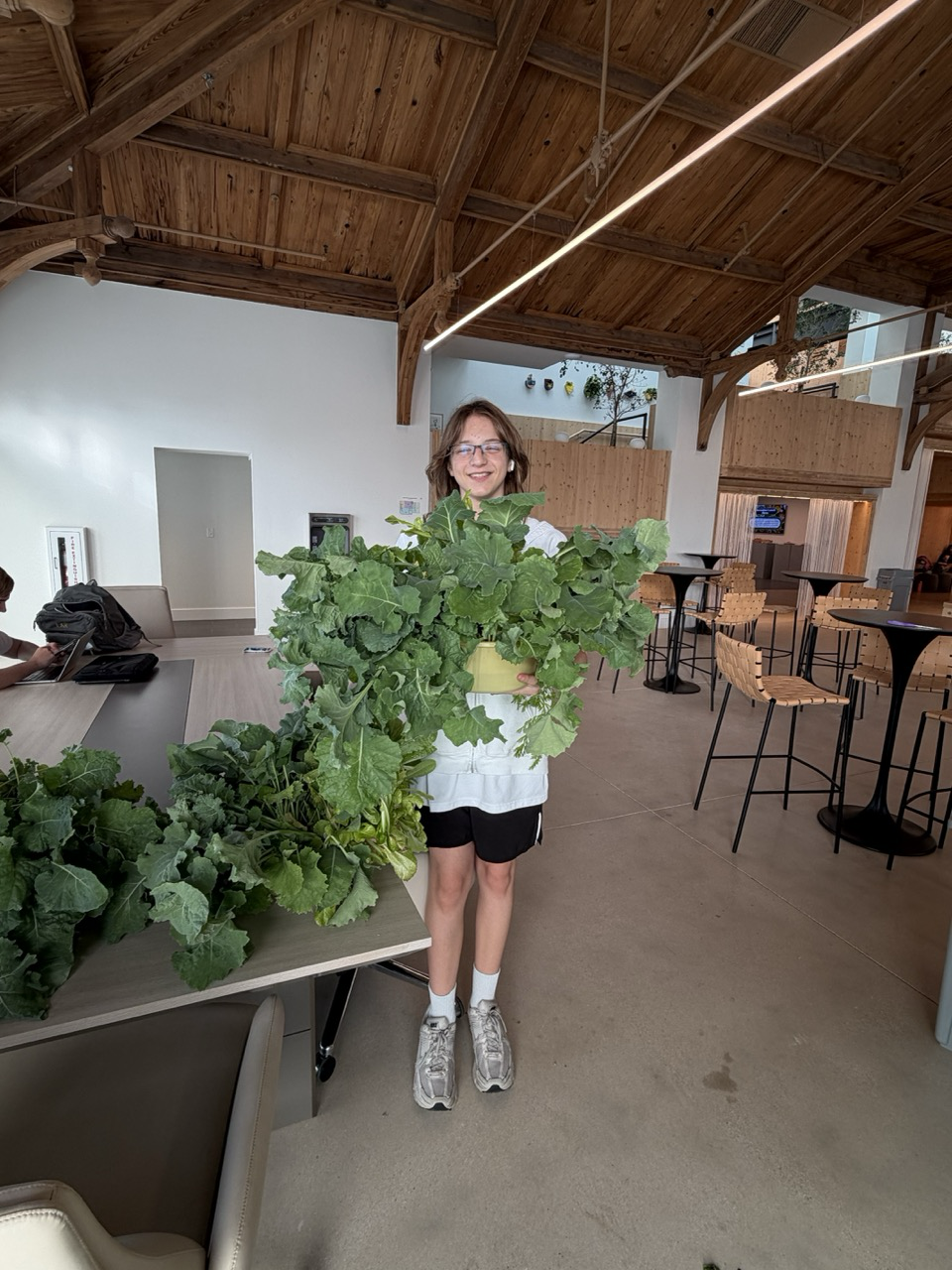
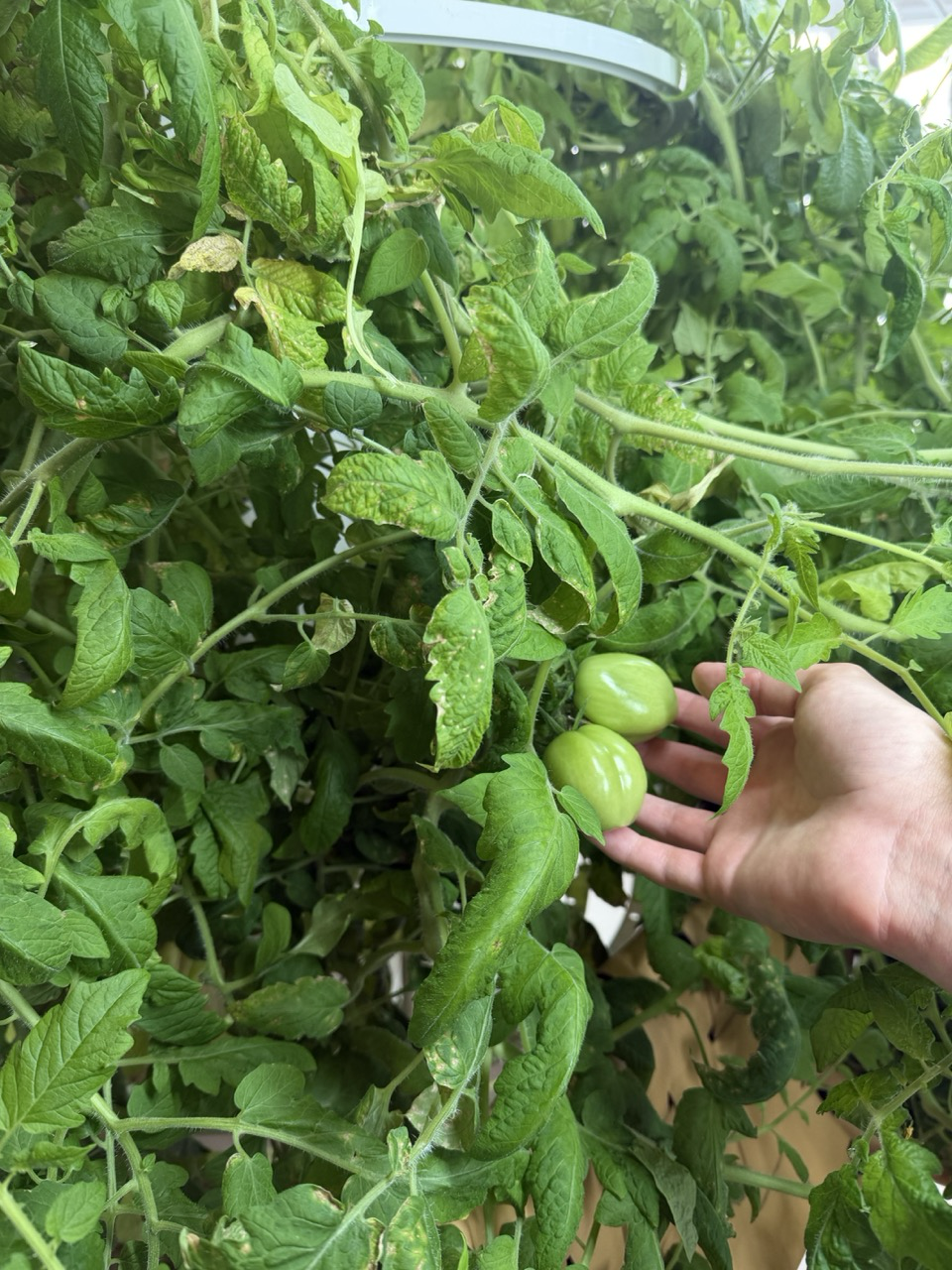
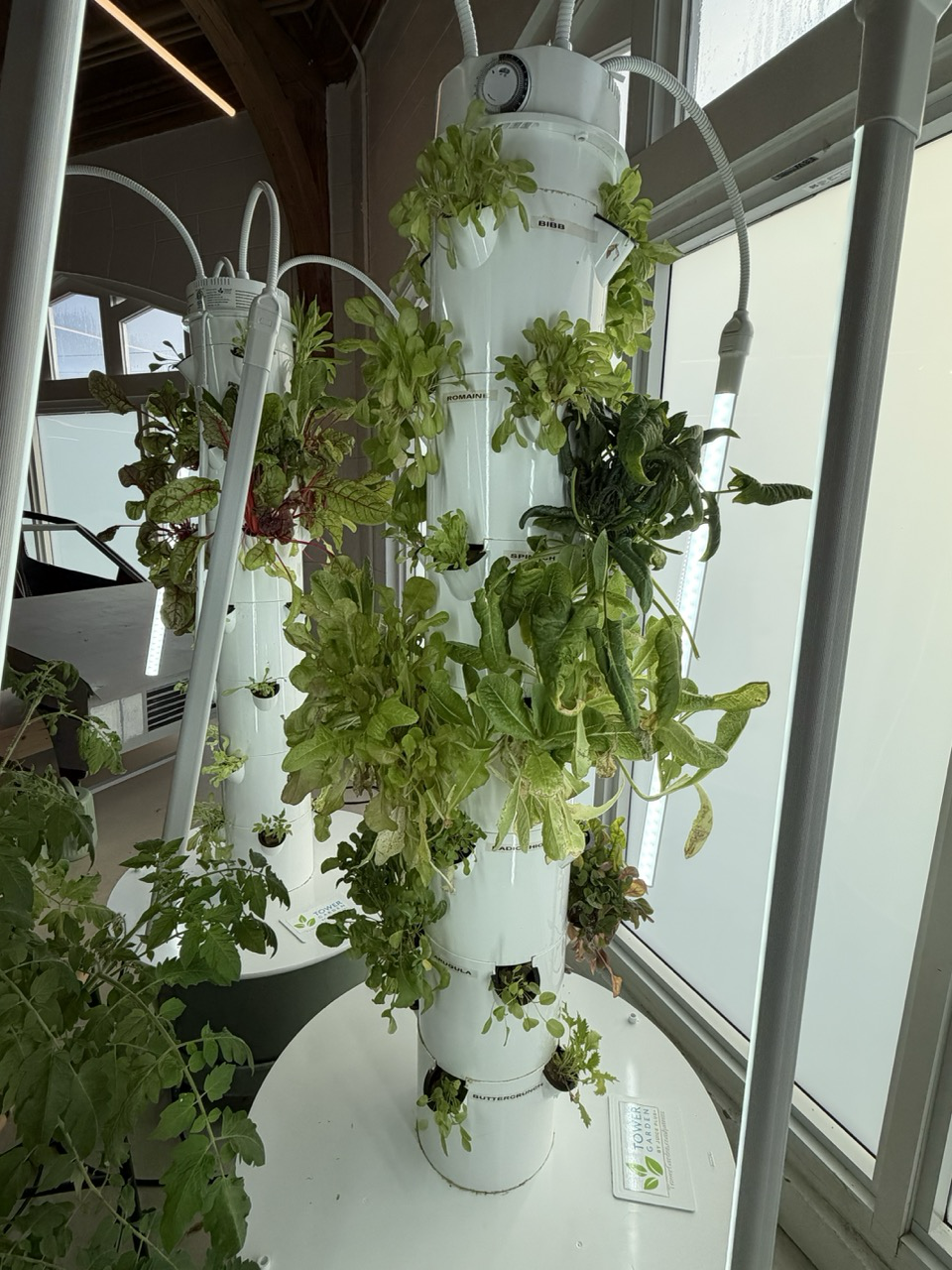
The system is already yielding incredible results! We have successfully completed multiple initial harvests of crisp, tender lettuce and are highly anticipating the first harvest of luscious tomatoes very soon. Nate is ensuring variety, currently growing an impressive and diverse collection of leafy greens, including high-demand varieties like bibb lettuce, nutrient-packed spinach, hardy kale, and several others!
The consistent yield has already become a valuable resource. Nate has been diligent in delivering the freshly harvested produce to Greene School faculty members to take home. Additionally, the greens are being supplied directly to the Greene School chefs for use in delicious and healthy cafeteria meals, creating a direct, zero-mile connection between the student garden and our dining hall.
This hydroponic garden is more than just a setup of pipes and water; it is a powerful, living example of how student-led initiative can create real, tangible, and delicious improvements to our community’s access to fresh food. We commend Nate for his vision and hard work, and we can’t wait to see what he grows next!
We are thrilled to shine a spotlight on a truly innovative and environmentally-conscious project that is currently blooming right here on the Greene School campus: a thriving hydroponic garden that’s bringing fresh, nutrient-dense produce straight to our faculty and campus kitchens!
This entire project is not a typical class assignment, but rather the product of deep passion and dedication, spearheaded by high school student Nate E. as an ambitious independent study project. With oversight and guidance from middle school science teacher Sarah Oster, Nate has successfully researched, built, maintained, and harvested a sophisticated, soil-free growing system that serves as a living laboratory for sustainable agriculture.
For those unfamiliar with this cutting-edge method, hydroponics is essentially a farming technique where plants are grown without the use of soil. Instead of extracting nutrients from dirt, the plant roots are either suspended in or constantly exposed to a meticulously balanced, oxygenated water solution that contains all the essential minerals needed for optimal growth.
The absence of soil is what makes this system so revolutionary, offering several distinct advantages over conventional farming:
This project perfectly embodies The Greene School’s core commitment to scientific innovation, hands-on learning, and environmental stewardship in the pursuit of food security.
Nate launched this independent project not just as a science experiment, but with a specific, practical goal: to explore sustainable agriculture methods and provide a consistent source of ultra-local, incredibly fresh greens to the school community.
The system is already yielding incredible results! We have successfully completed multiple initial harvests of crisp, tender lettuce and are highly anticipating the first harvest of luscious tomatoes very soon. Nate is ensuring variety, currently growing an impressive and diverse collection of leafy greens, including high-demand varieties like bibb lettuce, nutrient-packed spinach, hardy kale, and several others!
The consistent yield has already become a valuable resource. Nate has been diligent in delivering the freshly harvested produce to Greene School faculty members to take home. Additionally, the greens are being supplied directly to the Greene School chefs for use in delicious and healthy cafeteria meals, creating a direct, zero-mile connection between the student garden and our dining hall.
This hydroponic garden is more than just a setup of pipes and water; it is a powerful, living example of how student-led initiative can create real, tangible, and delicious improvements to our community’s access to fresh food. We commend Nate for his vision and hard work, and we can’t wait to see what he grows next!
We are thrilled to shine a spotlight on a truly innovative and environmentally-conscious project that is currently blooming right here on the Greene School campus: a thriving hydroponic garden that’s bringing fresh, nutrient-dense produce straight to our faculty and campus kitchens!
This entire project is not a typical class assignment, but rather the product of deep passion and dedication, spearheaded by high school student Nate E. as an ambitious independent study project. With oversight and guidance from middle school science teacher Sarah Oster, Nate has successfully researched, built, maintained, and harvested a sophisticated, soil-free growing system that serves as a living laboratory for sustainable agriculture.
For those unfamiliar with this cutting-edge method, hydroponics is essentially a farming technique where plants are grown without the use of soil. Instead of extracting nutrients from dirt, the plant roots are either suspended in or constantly exposed to a meticulously balanced, oxygenated water solution that contains all the essential minerals needed for optimal growth.
The absence of soil is what makes this system so revolutionary, offering several distinct advantages over conventional farming:
This project perfectly embodies The Greene School’s core commitment to scientific innovation, hands-on learning, and environmental stewardship in the pursuit of food security.
Nate launched this independent project not just as a science experiment, but with a specific, practical goal: to explore sustainable agriculture methods and provide a consistent source of ultra-local, incredibly fresh greens to the school community.
The system is already yielding incredible results! We have successfully completed multiple initial harvests of crisp, tender lettuce and are highly anticipating the first harvest of luscious tomatoes very soon. Nate is ensuring variety, currently growing an impressive and diverse collection of leafy greens, including high-demand varieties like bibb lettuce, nutrient-packed spinach, hardy kale, and several others!
The consistent yield has already become a valuable resource. Nate has been diligent in delivering the freshly harvested produce to Greene School faculty members to take home. Additionally, the greens are being supplied directly to the Greene School chefs for use in delicious and healthy cafeteria meals, creating a direct, zero-mile connection between the student garden and our dining hall.
This hydroponic garden is more than just a setup of pipes and water; it is a powerful, living example of how student-led initiative can create real, tangible, and delicious improvements to our community’s access to fresh food. We commend Nate for his vision and hard work, and we can’t wait to see what he grows next!
We are thrilled to shine a spotlight on a truly innovative and environmentally-conscious project that is currently blooming right here on the Greene School campus: a thriving hydroponic garden that’s bringing fresh, nutrient-dense produce straight to our faculty and campus kitchens!
This entire project is not a typical class assignment, but rather the product of deep passion and dedication, spearheaded by high school student Nate E. as an ambitious independent study project. With oversight and guidance from middle school science teacher Sarah Oster, Nate has successfully researched, built, maintained, and harvested a sophisticated, soil-free growing system that serves as a living laboratory for sustainable agriculture.
For those unfamiliar with this cutting-edge method, hydroponics is essentially a farming technique where plants are grown without the use of soil. Instead of extracting nutrients from dirt, the plant roots are either suspended in or constantly exposed to a meticulously balanced, oxygenated water solution that contains all the essential minerals needed for optimal growth.
The absence of soil is what makes this system so revolutionary, offering several distinct advantages over conventional farming:
This project perfectly embodies The Greene School’s core commitment to scientific innovation, hands-on learning, and environmental stewardship in the pursuit of food security.
Nate launched this independent project not just as a science experiment, but with a specific, practical goal: to explore sustainable agriculture methods and provide a consistent source of ultra-local, incredibly fresh greens to the school community.
The system is already yielding incredible results! We have successfully completed multiple initial harvests of crisp, tender lettuce and are highly anticipating the first harvest of luscious tomatoes very soon. Nate is ensuring variety, currently growing an impressive and diverse collection of leafy greens, including high-demand varieties like bibb lettuce, nutrient-packed spinach, hardy kale, and several others!
The consistent yield has already become a valuable resource. Nate has been diligent in delivering the freshly harvested produce to Greene School faculty members to take home. Additionally, the greens are being supplied directly to the Greene School chefs for use in delicious and healthy cafeteria meals, creating a direct, zero-mile connection between the student garden and our dining hall.
This hydroponic garden is more than just a setup of pipes and water; it is a powerful, living example of how student-led initiative can create real, tangible, and delicious improvements to our community’s access to fresh food. We commend Nate for his vision and hard work, and we can’t wait to see what he grows next!
We are thrilled to shine a spotlight on a truly innovative and environmentally-conscious project that is currently blooming right here on the Greene School campus: a thriving hydroponic garden that’s bringing fresh, nutrient-dense produce straight to our faculty and campus kitchens!
This entire project is not a typical class assignment, but rather the product of deep passion and dedication, spearheaded by high school student Nate E. as an ambitious independent study project. With oversight and guidance from middle school science teacher Sarah Oster, Nate has successfully researched, built, maintained, and harvested a sophisticated, soil-free growing system that serves as a living laboratory for sustainable agriculture.
For those unfamiliar with this cutting-edge method, hydroponics is essentially a farming technique where plants are grown without the use of soil. Instead of extracting nutrients from dirt, the plant roots are either suspended in or constantly exposed to a meticulously balanced, oxygenated water solution that contains all the essential minerals needed for optimal growth.
The absence of soil is what makes this system so revolutionary, offering several distinct advantages over conventional farming:
This project perfectly embodies The Greene School’s core commitment to scientific innovation, hands-on learning, and environmental stewardship in the pursuit of food security.
Nate launched this independent project not just as a science experiment, but with a specific, practical goal: to explore sustainable agriculture methods and provide a consistent source of ultra-local, incredibly fresh greens to the school community.
The system is already yielding incredible results! We have successfully completed multiple initial harvests of crisp, tender lettuce and are highly anticipating the first harvest of luscious tomatoes very soon. Nate is ensuring variety, currently growing an impressive and diverse collection of leafy greens, including high-demand varieties like bibb lettuce, nutrient-packed spinach, hardy kale, and several others!
The consistent yield has already become a valuable resource. Nate has been diligent in delivering the freshly harvested produce to Greene School faculty members to take home. Additionally, the greens are being supplied directly to the Greene School chefs for use in delicious and healthy cafeteria meals, creating a direct, zero-mile connection between the student garden and our dining hall.
This hydroponic garden is more than just a setup of pipes and water; it is a powerful, living example of how student-led initiative can create real, tangible, and delicious improvements to our community’s access to fresh food. We commend Nate for his vision and hard work, and we can’t wait to see what he grows next!
We are thrilled to shine a spotlight on a truly innovative and environmentally-conscious project that is currently blooming right here on the Greene School campus: a thriving hydroponic garden that’s bringing fresh, nutrient-dense produce straight to our faculty and campus kitchens!
This entire project is not a typical class assignment, but rather the product of deep passion and dedication, spearheaded by high school student Nate E. as an ambitious independent study project. With oversight and guidance from middle school science teacher Sarah Oster, Nate has successfully researched, built, maintained, and harvested a sophisticated, soil-free growing system that serves as a living laboratory for sustainable agriculture.
For those unfamiliar with this cutting-edge method, hydroponics is essentially a farming technique where plants are grown without the use of soil. Instead of extracting nutrients from dirt, the plant roots are either suspended in or constantly exposed to a meticulously balanced, oxygenated water solution that contains all the essential minerals needed for optimal growth.
The absence of soil is what makes this system so revolutionary, offering several distinct advantages over conventional farming:
This project perfectly embodies The Greene School’s core commitment to scientific innovation, hands-on learning, and environmental stewardship in the pursuit of food security.
Nate launched this independent project not just as a science experiment, but with a specific, practical goal: to explore sustainable agriculture methods and provide a consistent source of ultra-local, incredibly fresh greens to the school community.
The system is already yielding incredible results! We have successfully completed multiple initial harvests of crisp, tender lettuce and are highly anticipating the first harvest of luscious tomatoes very soon. Nate is ensuring variety, currently growing an impressive and diverse collection of leafy greens, including high-demand varieties like bibb lettuce, nutrient-packed spinach, hardy kale, and several others!
The consistent yield has already become a valuable resource. Nate has been diligent in delivering the freshly harvested produce to Greene School faculty members to take home. Additionally, the greens are being supplied directly to the Greene School chefs for use in delicious and healthy cafeteria meals, creating a direct, zero-mile connection between the student garden and our dining hall.
This hydroponic garden is more than just a setup of pipes and water; it is a powerful, living example of how student-led initiative can create real, tangible, and delicious improvements to our community’s access to fresh food. We commend Nate for his vision and hard work, and we can’t wait to see what he grows next!


.svg)

