.svg)
.svg)

- Home
- About Us
- Academics


This month The Greene School’s 8th Grade Museum Studies students traveled to New York City for an immersive academic experience centered on the theme Presenting Difficult Topics. Throughout the week, students examined how museums, artists, performers, and cultural institutions responsibly interpret and present challenging histories.
The trip directly supported student preparation for their own upcoming 2D and 3D exhibits focused on resistance movements during the Holocaust and on understanding tolerance through the study of racist Jim Crow era memorabilia. Participants included the 8th Grade Museum Studies class, Steven Hammerman, and Ms. Matthews.
Building Context Through Narrative and Performance
The experience began immediately upon arrival in New York City, where winter weather and the pace of the city created an immersive backdrop for the week ahead. After a classic New York welcome with lunch at Joe’s Pizza, students began their academic work at the Anne Frank Exhibit.
Approaching the exhibit as both visitors and critics, students analyzed how museums present trauma, resistance, and personal narrative. They evaluated curatorial decisions involving artifact placement, pacing, emotional weight, and audience responsibility. This visit anchored the week’s central theme and established a framework for deeper comparisons.
That evening, students attended Harry Potter and the Cursed Child, examining storytelling, symbolism, and stagecraft as interpretive tools. A surprise post show conversation with Emmett Smith reinforced the connection between performance, narrative, and audience impact.
Downtown History and Institutional Responsibility
Monday focused on lived history and urban development. Guided exploration through Lower Manhattan included Castle Clinton and the Alexander Hamilton U.S. Custom House, now home to the National Museum of the American Indian. Students discussed geography, immigration, adaptive reuse, and how historic spaces are reinterpreted over time.
Conversations about symbolism and memorialization continued at the World Trade Center and Fulton Center, where public space, architecture, and collective memory intersect.
In the afternoon, students met with curators and archivists at the Center for Jewish History, asking thoughtful questions about archival bias, ethical responsibility, and the challenges of presenting painful histories with accuracy and humanity. A visit to the Tenement Museum further deepened understanding of immigrant narratives, inequality, and resilience through preserved living spaces and personal stories.
Research, Modern Art, and Curatorial Voice
Tuesday brought students to the Morgan Library & Museum, where curator Dei Jackson guided them through the Storytelling exhibit. Students viewed a Gutenberg Bible and a tapestry commissioned by Henry VIII, exploring how power, access to information, and patronage shape historical narrative.
Later, at the Museum of Modern Art, curator Paola Antonelli led a specialized experience centered on resistance movements and modern art. Students analyzed curatorial intent, audience engagement, and ethical framing, viewing works such as The Starry Night alongside contemporary pieces that challenge viewers to confront injustice.
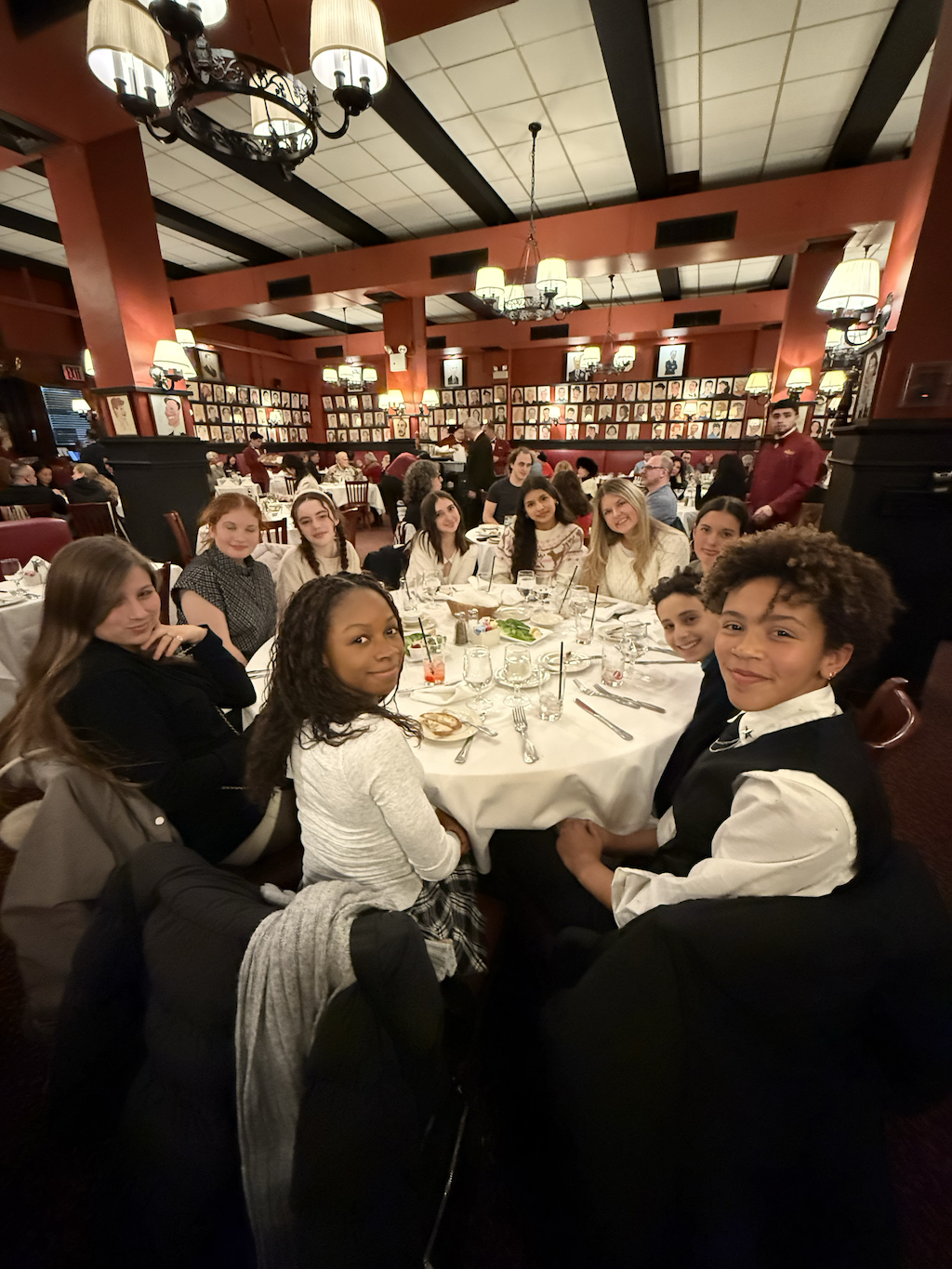
The evening concluded with orchestra seating for Hamilton, followed by a conversation with Jarrod Spector, who shared insight into character interpretation and performance choices.
Civic Culture, Media, and Public Space
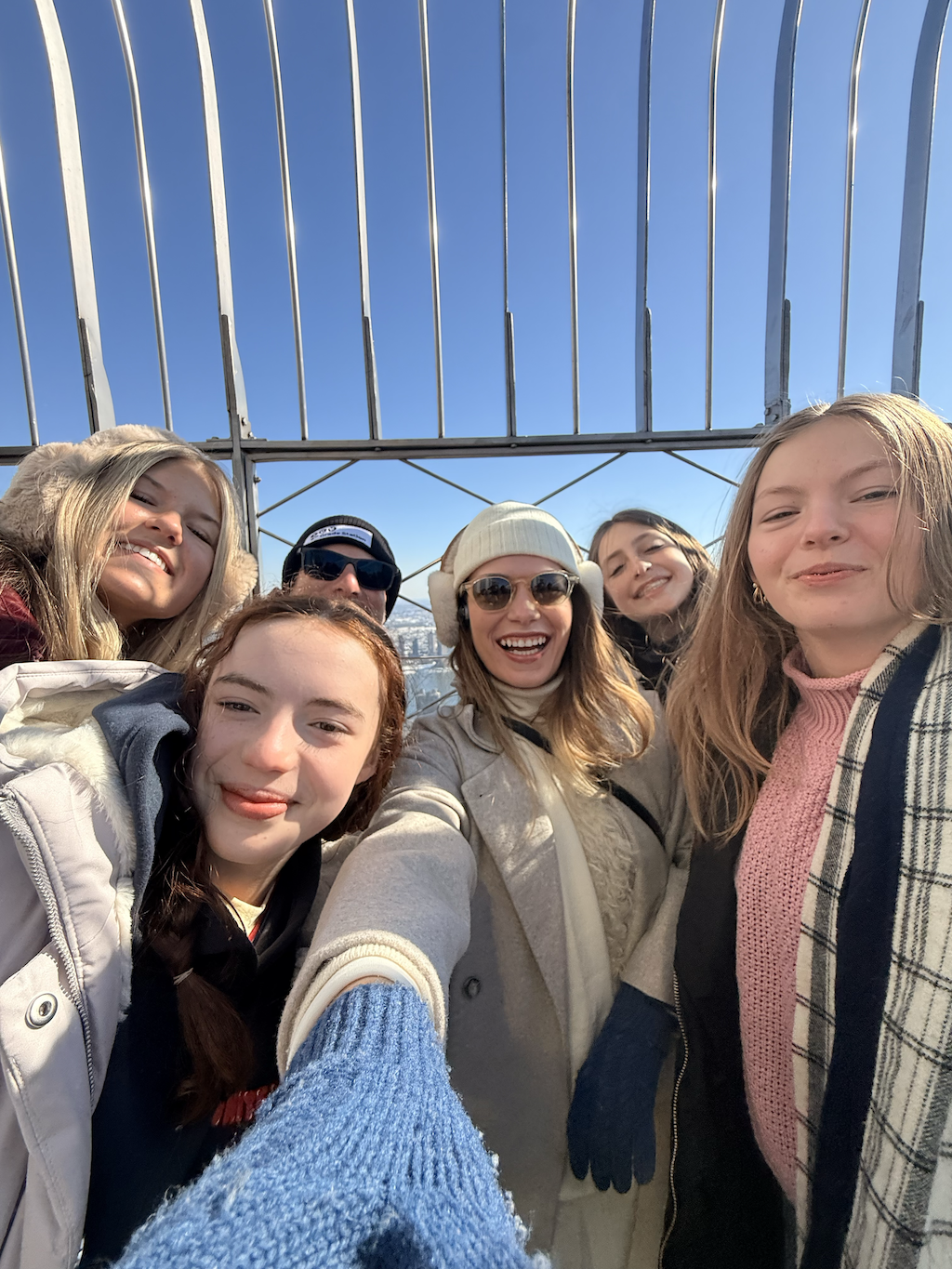
Midweek exploration highlighted Midtown architecture, including Grand Central Terminal and the Empire State Building, prompting discussions about design, symbolism, and civic identity.
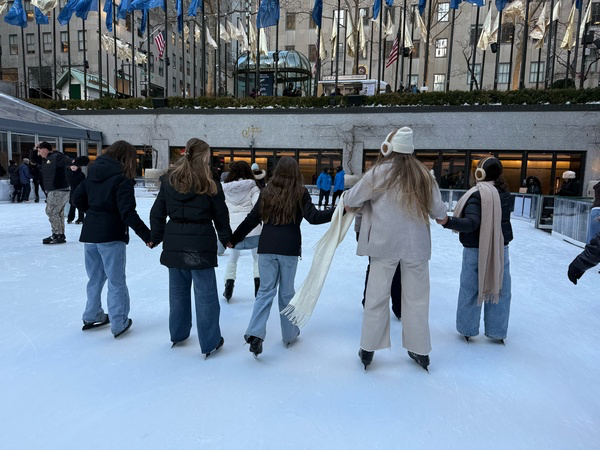
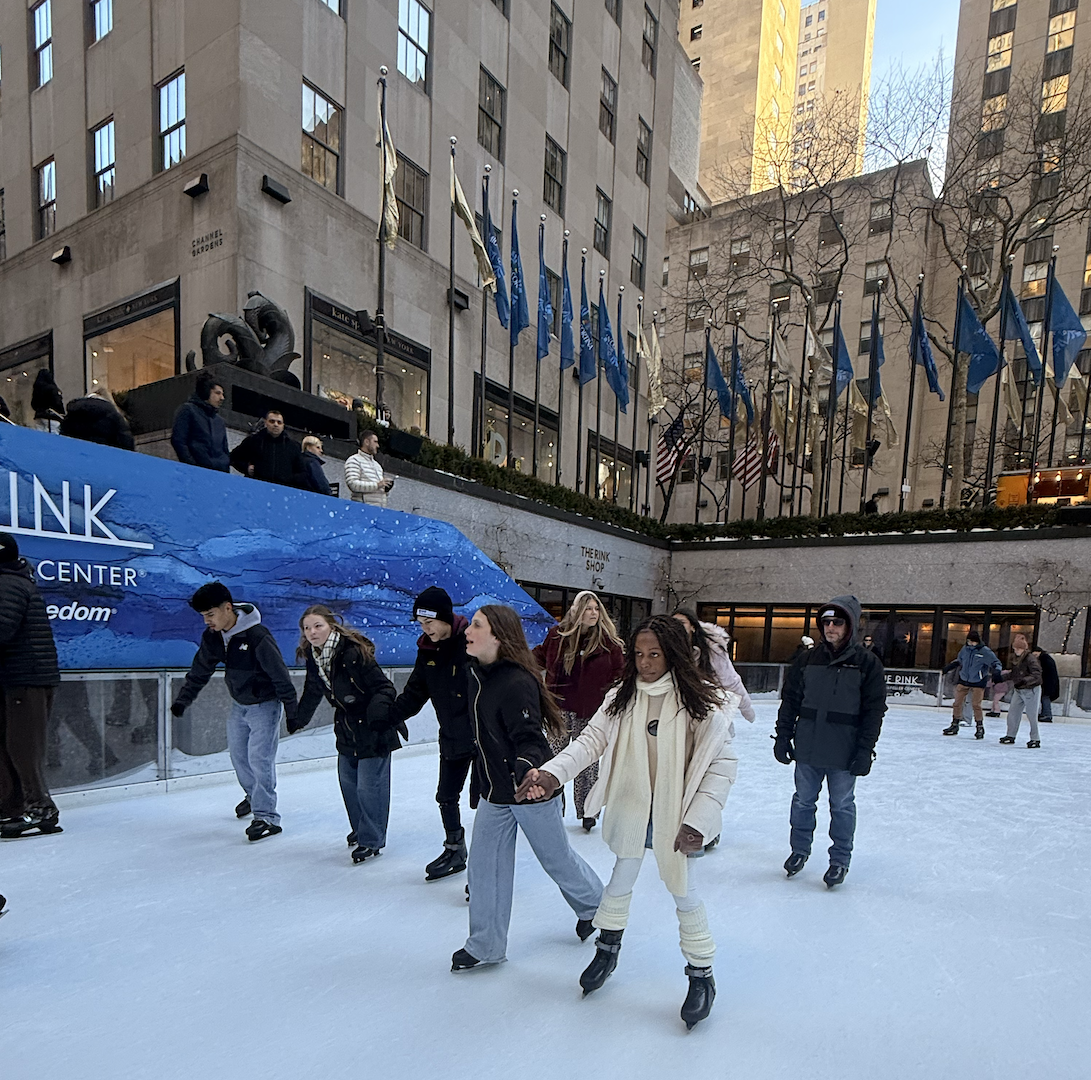
Students also experienced a behind the scenes tour of Fox News studios, ice skating at Rockefeller Center, and an evening at New York Knicks game at Madison Square Garden, where a double overtime victory provided an unforgettable conclusion to the final full night in the city.
Street Art, Resistance, and Reflection
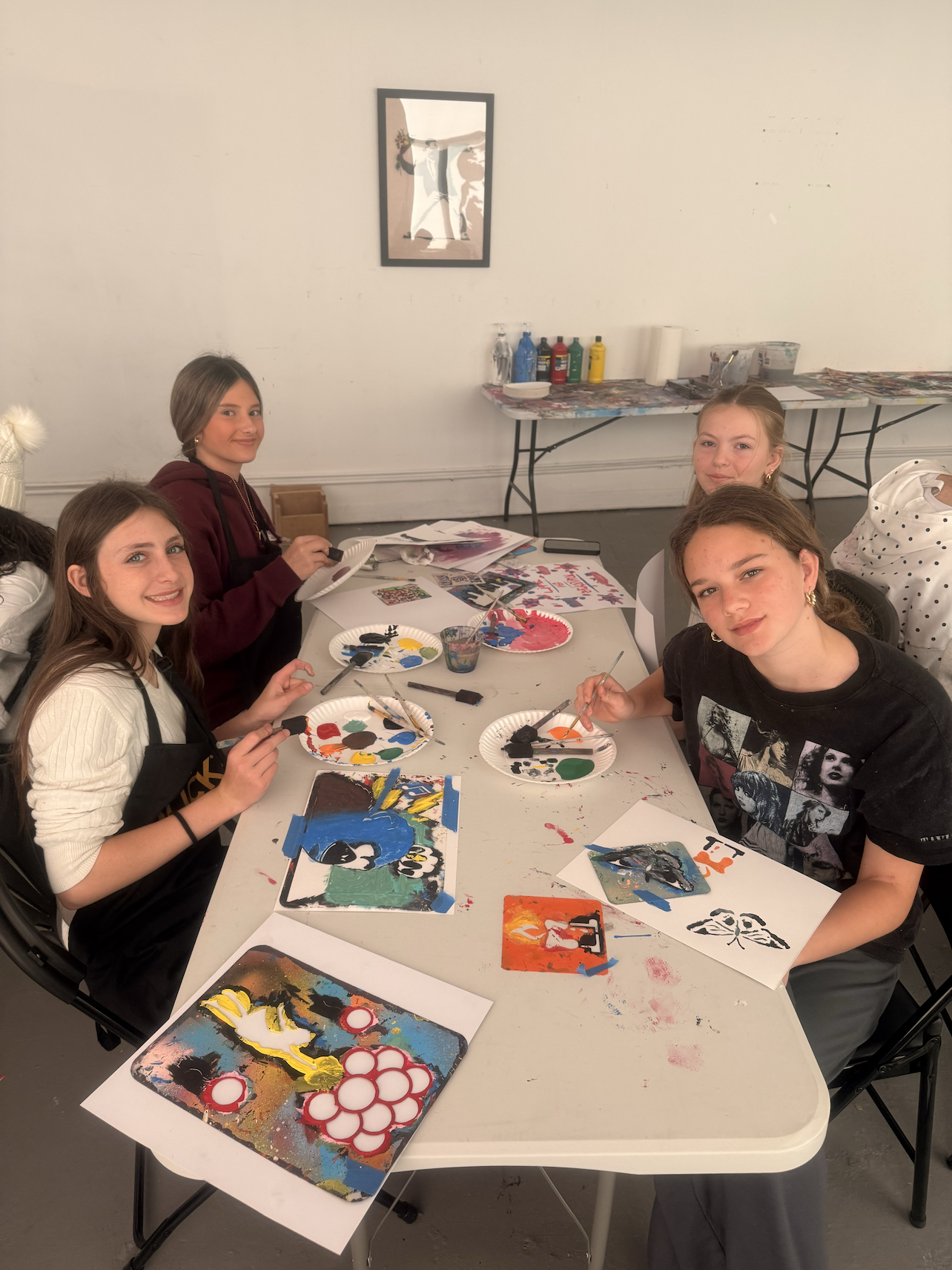
On the final day, students explored street art as a form of protest and public dialogue at the Banksy Exhibit. Conversations centered on anonymity, resistance, and the power of art in shared spaces. A hands on art making session allowed students to apply their learning before reflecting together on the subway ride to the airport.
Students returned home safely that evening, concluding a rigorous and meaningful Museum Studies experience grounded in empathy, critical thinking, and ethical storytelling.
A Transformative Academic Experience
The 8th Grade Museum Studies trip to New York City exemplified The Greene School’s commitment to experiential learning. By examining how institutions present difficult topics with integrity and care, students gained not only historical knowledge but also the tools to thoughtfully construct their own exhibits. The week challenged them to consider voice, responsibility, and audience impact, strengthening both their academic work and their capacity for informed civic engagement.
This month The Greene School’s 8th Grade Museum Studies students traveled to New York City for an immersive academic experience centered on the theme Presenting Difficult Topics. Throughout the week, students examined how museums, artists, performers, and cultural institutions responsibly interpret and present challenging histories.
The trip directly supported student preparation for their own upcoming 2D and 3D exhibits focused on resistance movements during the Holocaust and on understanding tolerance through the study of racist Jim Crow era memorabilia. Participants included the 8th Grade Museum Studies class, Steven Hammerman, and Ms. Matthews.
Building Context Through Narrative and Performance
The experience began immediately upon arrival in New York City, where winter weather and the pace of the city created an immersive backdrop for the week ahead. After a classic New York welcome with lunch at Joe’s Pizza, students began their academic work at the Anne Frank Exhibit.
Approaching the exhibit as both visitors and critics, students analyzed how museums present trauma, resistance, and personal narrative. They evaluated curatorial decisions involving artifact placement, pacing, emotional weight, and audience responsibility. This visit anchored the week’s central theme and established a framework for deeper comparisons.
That evening, students attended Harry Potter and the Cursed Child, examining storytelling, symbolism, and stagecraft as interpretive tools. A surprise post show conversation with Emmett Smith reinforced the connection between performance, narrative, and audience impact.
Downtown History and Institutional Responsibility
Monday focused on lived history and urban development. Guided exploration through Lower Manhattan included Castle Clinton and the Alexander Hamilton U.S. Custom House, now home to the National Museum of the American Indian. Students discussed geography, immigration, adaptive reuse, and how historic spaces are reinterpreted over time.
Conversations about symbolism and memorialization continued at the World Trade Center and Fulton Center, where public space, architecture, and collective memory intersect.
In the afternoon, students met with curators and archivists at the Center for Jewish History, asking thoughtful questions about archival bias, ethical responsibility, and the challenges of presenting painful histories with accuracy and humanity. A visit to the Tenement Museum further deepened understanding of immigrant narratives, inequality, and resilience through preserved living spaces and personal stories.
Research, Modern Art, and Curatorial Voice
Tuesday brought students to the Morgan Library & Museum, where curator Dei Jackson guided them through the Storytelling exhibit. Students viewed a Gutenberg Bible and a tapestry commissioned by Henry VIII, exploring how power, access to information, and patronage shape historical narrative.
Later, at the Museum of Modern Art, curator Paola Antonelli led a specialized experience centered on resistance movements and modern art. Students analyzed curatorial intent, audience engagement, and ethical framing, viewing works such as The Starry Night alongside contemporary pieces that challenge viewers to confront injustice.
The evening concluded with orchestra seating for Hamilton, followed by a conversation with Jarrod Spector, who shared insight into character interpretation and performance choices.
Civic Culture, Media, and Public Space
Midweek exploration highlighted Midtown architecture, including Grand Central Terminal and the Empire State Building, prompting discussions about design, symbolism, and civic identity.
Students also experienced a behind the scenes tour of Fox News studios, ice skating at Rockefeller Center, and an evening at New York Knicks game at Madison Square Garden, where a double overtime victory provided an unforgettable conclusion to the final full night in the city.
Street Art, Resistance, and Reflection
On the final day, students explored street art as a form of protest and public dialogue at the Banksy Exhibit. Conversations centered on anonymity, resistance, and the power of art in shared spaces. A hands on art making session allowed students to apply their learning before reflecting together on the subway ride to the airport.
Students returned home safely that evening, concluding a rigorous and meaningful Museum Studies experience grounded in empathy, critical thinking, and ethical storytelling.
A Transformative Academic Experience
The 8th Grade Museum Studies trip to New York City exemplified The Greene School’s commitment to experiential learning. By examining how institutions present difficult topics with integrity and care, students gained not only historical knowledge but also the tools to thoughtfully construct their own exhibits. The week challenged them to consider voice, responsibility, and audience impact, strengthening both their academic work and their capacity for informed civic engagement.
This month The Greene School’s 8th Grade Museum Studies students traveled to New York City for an immersive academic experience centered on the theme Presenting Difficult Topics. Throughout the week, students examined how museums, artists, performers, and cultural institutions responsibly interpret and present challenging histories.
The trip directly supported student preparation for their own upcoming 2D and 3D exhibits focused on resistance movements during the Holocaust and on understanding tolerance through the study of racist Jim Crow era memorabilia. Participants included the 8th Grade Museum Studies class, Steven Hammerman, and Ms. Matthews.
Building Context Through Narrative and Performance
The experience began immediately upon arrival in New York City, where winter weather and the pace of the city created an immersive backdrop for the week ahead. After a classic New York welcome with lunch at Joe’s Pizza, students began their academic work at the Anne Frank Exhibit.
Approaching the exhibit as both visitors and critics, students analyzed how museums present trauma, resistance, and personal narrative. They evaluated curatorial decisions involving artifact placement, pacing, emotional weight, and audience responsibility. This visit anchored the week’s central theme and established a framework for deeper comparisons.
That evening, students attended Harry Potter and the Cursed Child, examining storytelling, symbolism, and stagecraft as interpretive tools. A surprise post show conversation with Emmett Smith reinforced the connection between performance, narrative, and audience impact.
Downtown History and Institutional Responsibility
Monday focused on lived history and urban development. Guided exploration through Lower Manhattan included Castle Clinton and the Alexander Hamilton U.S. Custom House, now home to the National Museum of the American Indian. Students discussed geography, immigration, adaptive reuse, and how historic spaces are reinterpreted over time.
Conversations about symbolism and memorialization continued at the World Trade Center and Fulton Center, where public space, architecture, and collective memory intersect.
In the afternoon, students met with curators and archivists at the Center for Jewish History, asking thoughtful questions about archival bias, ethical responsibility, and the challenges of presenting painful histories with accuracy and humanity. A visit to the Tenement Museum further deepened understanding of immigrant narratives, inequality, and resilience through preserved living spaces and personal stories.
Research, Modern Art, and Curatorial Voice
Tuesday brought students to the Morgan Library & Museum, where curator Dei Jackson guided them through the Storytelling exhibit. Students viewed a Gutenberg Bible and a tapestry commissioned by Henry VIII, exploring how power, access to information, and patronage shape historical narrative.
Later, at the Museum of Modern Art, curator Paola Antonelli led a specialized experience centered on resistance movements and modern art. Students analyzed curatorial intent, audience engagement, and ethical framing, viewing works such as The Starry Night alongside contemporary pieces that challenge viewers to confront injustice.
The evening concluded with orchestra seating for Hamilton, followed by a conversation with Jarrod Spector, who shared insight into character interpretation and performance choices.
Civic Culture, Media, and Public Space
Midweek exploration highlighted Midtown architecture, including Grand Central Terminal and the Empire State Building, prompting discussions about design, symbolism, and civic identity.
Students also experienced a behind the scenes tour of Fox News studios, ice skating at Rockefeller Center, and an evening at New York Knicks game at Madison Square Garden, where a double overtime victory provided an unforgettable conclusion to the final full night in the city.
Street Art, Resistance, and Reflection
On the final day, students explored street art as a form of protest and public dialogue at the Banksy Exhibit. Conversations centered on anonymity, resistance, and the power of art in shared spaces. A hands on art making session allowed students to apply their learning before reflecting together on the subway ride to the airport.
Students returned home safely that evening, concluding a rigorous and meaningful Museum Studies experience grounded in empathy, critical thinking, and ethical storytelling.
A Transformative Academic Experience
The 8th Grade Museum Studies trip to New York City exemplified The Greene School’s commitment to experiential learning. By examining how institutions present difficult topics with integrity and care, students gained not only historical knowledge but also the tools to thoughtfully construct their own exhibits. The week challenged them to consider voice, responsibility, and audience impact, strengthening both their academic work and their capacity for informed civic engagement.
This month The Greene School’s 8th Grade Museum Studies students traveled to New York City for an immersive academic experience centered on the theme Presenting Difficult Topics. Throughout the week, students examined how museums, artists, performers, and cultural institutions responsibly interpret and present challenging histories.
The trip directly supported student preparation for their own upcoming 2D and 3D exhibits focused on resistance movements during the Holocaust and on understanding tolerance through the study of racist Jim Crow era memorabilia. Participants included the 8th Grade Museum Studies class, Steven Hammerman, and Ms. Matthews.
Building Context Through Narrative and Performance
The experience began immediately upon arrival in New York City, where winter weather and the pace of the city created an immersive backdrop for the week ahead. After a classic New York welcome with lunch at Joe’s Pizza, students began their academic work at the Anne Frank Exhibit.
Approaching the exhibit as both visitors and critics, students analyzed how museums present trauma, resistance, and personal narrative. They evaluated curatorial decisions involving artifact placement, pacing, emotional weight, and audience responsibility. This visit anchored the week’s central theme and established a framework for deeper comparisons.
That evening, students attended Harry Potter and the Cursed Child, examining storytelling, symbolism, and stagecraft as interpretive tools. A surprise post show conversation with Emmett Smith reinforced the connection between performance, narrative, and audience impact.
Downtown History and Institutional Responsibility
Monday focused on lived history and urban development. Guided exploration through Lower Manhattan included Castle Clinton and the Alexander Hamilton U.S. Custom House, now home to the National Museum of the American Indian. Students discussed geography, immigration, adaptive reuse, and how historic spaces are reinterpreted over time.
Conversations about symbolism and memorialization continued at the World Trade Center and Fulton Center, where public space, architecture, and collective memory intersect.
In the afternoon, students met with curators and archivists at the Center for Jewish History, asking thoughtful questions about archival bias, ethical responsibility, and the challenges of presenting painful histories with accuracy and humanity. A visit to the Tenement Museum further deepened understanding of immigrant narratives, inequality, and resilience through preserved living spaces and personal stories.
Research, Modern Art, and Curatorial Voice
Tuesday brought students to the Morgan Library & Museum, where curator Dei Jackson guided them through the Storytelling exhibit. Students viewed a Gutenberg Bible and a tapestry commissioned by Henry VIII, exploring how power, access to information, and patronage shape historical narrative.
Later, at the Museum of Modern Art, curator Paola Antonelli led a specialized experience centered on resistance movements and modern art. Students analyzed curatorial intent, audience engagement, and ethical framing, viewing works such as The Starry Night alongside contemporary pieces that challenge viewers to confront injustice.
The evening concluded with orchestra seating for Hamilton, followed by a conversation with Jarrod Spector, who shared insight into character interpretation and performance choices.
Civic Culture, Media, and Public Space
Midweek exploration highlighted Midtown architecture, including Grand Central Terminal and the Empire State Building, prompting discussions about design, symbolism, and civic identity.
Students also experienced a behind the scenes tour of Fox News studios, ice skating at Rockefeller Center, and an evening at New York Knicks game at Madison Square Garden, where a double overtime victory provided an unforgettable conclusion to the final full night in the city.
Street Art, Resistance, and Reflection
On the final day, students explored street art as a form of protest and public dialogue at the Banksy Exhibit. Conversations centered on anonymity, resistance, and the power of art in shared spaces. A hands on art making session allowed students to apply their learning before reflecting together on the subway ride to the airport.
Students returned home safely that evening, concluding a rigorous and meaningful Museum Studies experience grounded in empathy, critical thinking, and ethical storytelling.
A Transformative Academic Experience
The 8th Grade Museum Studies trip to New York City exemplified The Greene School’s commitment to experiential learning. By examining how institutions present difficult topics with integrity and care, students gained not only historical knowledge but also the tools to thoughtfully construct their own exhibits. The week challenged them to consider voice, responsibility, and audience impact, strengthening both their academic work and their capacity for informed civic engagement.
This month The Greene School’s 8th Grade Museum Studies students traveled to New York City for an immersive academic experience centered on the theme Presenting Difficult Topics. Throughout the week, students examined how museums, artists, performers, and cultural institutions responsibly interpret and present challenging histories.
The trip directly supported student preparation for their own upcoming 2D and 3D exhibits focused on resistance movements during the Holocaust and on understanding tolerance through the study of racist Jim Crow era memorabilia. Participants included the 8th Grade Museum Studies class, Steven Hammerman, and Ms. Matthews.
Building Context Through Narrative and Performance
The experience began immediately upon arrival in New York City, where winter weather and the pace of the city created an immersive backdrop for the week ahead. After a classic New York welcome with lunch at Joe’s Pizza, students began their academic work at the Anne Frank Exhibit.
Approaching the exhibit as both visitors and critics, students analyzed how museums present trauma, resistance, and personal narrative. They evaluated curatorial decisions involving artifact placement, pacing, emotional weight, and audience responsibility. This visit anchored the week’s central theme and established a framework for deeper comparisons.
That evening, students attended Harry Potter and the Cursed Child, examining storytelling, symbolism, and stagecraft as interpretive tools. A surprise post show conversation with Emmett Smith reinforced the connection between performance, narrative, and audience impact.
Downtown History and Institutional Responsibility
Monday focused on lived history and urban development. Guided exploration through Lower Manhattan included Castle Clinton and the Alexander Hamilton U.S. Custom House, now home to the National Museum of the American Indian. Students discussed geography, immigration, adaptive reuse, and how historic spaces are reinterpreted over time.
Conversations about symbolism and memorialization continued at the World Trade Center and Fulton Center, where public space, architecture, and collective memory intersect.
In the afternoon, students met with curators and archivists at the Center for Jewish History, asking thoughtful questions about archival bias, ethical responsibility, and the challenges of presenting painful histories with accuracy and humanity. A visit to the Tenement Museum further deepened understanding of immigrant narratives, inequality, and resilience through preserved living spaces and personal stories.
Research, Modern Art, and Curatorial Voice
Tuesday brought students to the Morgan Library & Museum, where curator Dei Jackson guided them through the Storytelling exhibit. Students viewed a Gutenberg Bible and a tapestry commissioned by Henry VIII, exploring how power, access to information, and patronage shape historical narrative.
Later, at the Museum of Modern Art, curator Paola Antonelli led a specialized experience centered on resistance movements and modern art. Students analyzed curatorial intent, audience engagement, and ethical framing, viewing works such as The Starry Night alongside contemporary pieces that challenge viewers to confront injustice.
The evening concluded with orchestra seating for Hamilton, followed by a conversation with Jarrod Spector, who shared insight into character interpretation and performance choices.
Civic Culture, Media, and Public Space
Midweek exploration highlighted Midtown architecture, including Grand Central Terminal and the Empire State Building, prompting discussions about design, symbolism, and civic identity.
Students also experienced a behind the scenes tour of Fox News studios, ice skating at Rockefeller Center, and an evening at New York Knicks game at Madison Square Garden, where a double overtime victory provided an unforgettable conclusion to the final full night in the city.
Street Art, Resistance, and Reflection
On the final day, students explored street art as a form of protest and public dialogue at the Banksy Exhibit. Conversations centered on anonymity, resistance, and the power of art in shared spaces. A hands on art making session allowed students to apply their learning before reflecting together on the subway ride to the airport.
Students returned home safely that evening, concluding a rigorous and meaningful Museum Studies experience grounded in empathy, critical thinking, and ethical storytelling.
A Transformative Academic Experience
The 8th Grade Museum Studies trip to New York City exemplified The Greene School’s commitment to experiential learning. By examining how institutions present difficult topics with integrity and care, students gained not only historical knowledge but also the tools to thoughtfully construct their own exhibits. The week challenged them to consider voice, responsibility, and audience impact, strengthening both their academic work and their capacity for informed civic engagement.
This month The Greene School’s 8th Grade Museum Studies students traveled to New York City for an immersive academic experience centered on the theme Presenting Difficult Topics. Throughout the week, students examined how museums, artists, performers, and cultural institutions responsibly interpret and present challenging histories.
The trip directly supported student preparation for their own upcoming 2D and 3D exhibits focused on resistance movements during the Holocaust and on understanding tolerance through the study of racist Jim Crow era memorabilia. Participants included the 8th Grade Museum Studies class, Steven Hammerman, and Ms. Matthews.
Building Context Through Narrative and Performance
The experience began immediately upon arrival in New York City, where winter weather and the pace of the city created an immersive backdrop for the week ahead. After a classic New York welcome with lunch at Joe’s Pizza, students began their academic work at the Anne Frank Exhibit.
Approaching the exhibit as both visitors and critics, students analyzed how museums present trauma, resistance, and personal narrative. They evaluated curatorial decisions involving artifact placement, pacing, emotional weight, and audience responsibility. This visit anchored the week’s central theme and established a framework for deeper comparisons.
That evening, students attended Harry Potter and the Cursed Child, examining storytelling, symbolism, and stagecraft as interpretive tools. A surprise post show conversation with Emmett Smith reinforced the connection between performance, narrative, and audience impact.
Downtown History and Institutional Responsibility
Monday focused on lived history and urban development. Guided exploration through Lower Manhattan included Castle Clinton and the Alexander Hamilton U.S. Custom House, now home to the National Museum of the American Indian. Students discussed geography, immigration, adaptive reuse, and how historic spaces are reinterpreted over time.
Conversations about symbolism and memorialization continued at the World Trade Center and Fulton Center, where public space, architecture, and collective memory intersect.
In the afternoon, students met with curators and archivists at the Center for Jewish History, asking thoughtful questions about archival bias, ethical responsibility, and the challenges of presenting painful histories with accuracy and humanity. A visit to the Tenement Museum further deepened understanding of immigrant narratives, inequality, and resilience through preserved living spaces and personal stories.
Research, Modern Art, and Curatorial Voice
Tuesday brought students to the Morgan Library & Museum, where curator Dei Jackson guided them through the Storytelling exhibit. Students viewed a Gutenberg Bible and a tapestry commissioned by Henry VIII, exploring how power, access to information, and patronage shape historical narrative.
Later, at the Museum of Modern Art, curator Paola Antonelli led a specialized experience centered on resistance movements and modern art. Students analyzed curatorial intent, audience engagement, and ethical framing, viewing works such as The Starry Night alongside contemporary pieces that challenge viewers to confront injustice.
The evening concluded with orchestra seating for Hamilton, followed by a conversation with Jarrod Spector, who shared insight into character interpretation and performance choices.
Civic Culture, Media, and Public Space
Midweek exploration highlighted Midtown architecture, including Grand Central Terminal and the Empire State Building, prompting discussions about design, symbolism, and civic identity.
Students also experienced a behind the scenes tour of Fox News studios, ice skating at Rockefeller Center, and an evening at New York Knicks game at Madison Square Garden, where a double overtime victory provided an unforgettable conclusion to the final full night in the city.
Street Art, Resistance, and Reflection
On the final day, students explored street art as a form of protest and public dialogue at the Banksy Exhibit. Conversations centered on anonymity, resistance, and the power of art in shared spaces. A hands on art making session allowed students to apply their learning before reflecting together on the subway ride to the airport.
Students returned home safely that evening, concluding a rigorous and meaningful Museum Studies experience grounded in empathy, critical thinking, and ethical storytelling.
A Transformative Academic Experience
The 8th Grade Museum Studies trip to New York City exemplified The Greene School’s commitment to experiential learning. By examining how institutions present difficult topics with integrity and care, students gained not only historical knowledge but also the tools to thoughtfully construct their own exhibits. The week challenged them to consider voice, responsibility, and audience impact, strengthening both their academic work and their capacity for informed civic engagement.


.svg)

